Day 5 · Catania & Etna
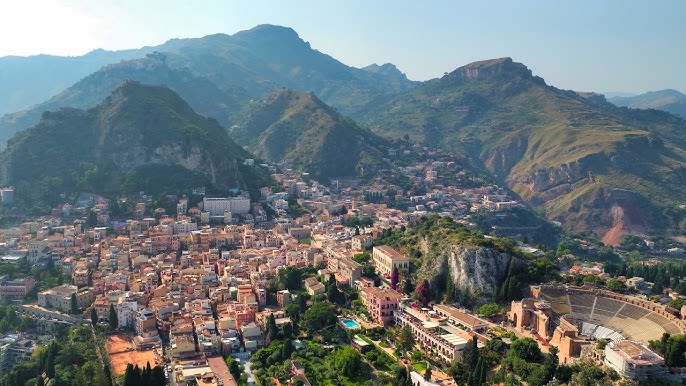
Teatro Antico di Taormina
Step 1 · Before you enter · ~15 sec

Teatro Antico di Taormina

★ 4.6 (39,436) €28 Maps ↗ Website ↗

It began as a 3rd-century BCE Greek theatre, but the Romans later turned its orchestra into an arena for gladiator fights and animal hunts. Even now, the place still carries that double life: a serious ruin that once knew blood, spectacle, and the hard discipline of reinvention.

Stand outside · play the audio first, then read on.

Step 2 · The story · ~2 min

Why this place matters

Taormina’s theater was not originally built for Roman spectacle at all. The first Greek version rose in the 3rd century BCE, probably under Hiero II of Syracuse, when Tauromenion was part of the Greek world of Sicily and performance space was civic space: a place for drama, public life, and the self-confidence of a Greek city on a hard, elevated site.[4][7][13]

What makes the place matter is the Roman takeover of the story. By the 2nd century CE, the theater had been rebuilt and enlarged under Roman rule, with further work in the 3rd century turning it into a venue for gladiatorial combat; the surviving monument is therefore a palimpsest, Greek base, Roman superstructure, and later adaptation in one rocky bowl.[13][14] Today, visitors still read that history in the carved seating cut into Mount Tauro and in the Greek inscriptions preserved from the earlier theater, small survivals that make the whole ruin feel less like a ruin than a record.[4][13]

Read more →
Step 3 · Going in

Here's how

Best time to visit

Go early, ideally by 9 a.m., or later in the afternoon. Midday brings the harshest light and the biggest crowds; afternoon is the better bet for the Etna-and-sea backdrop.

Entry strategy

Park at Porta Catania or Lumbi garage and walk in, because Taormina centro is in a ZTL and you should not drive there. Expect uneven stone and a climb, so keep water handy and wear real shoes.

Recommended route

Enter and head first to the upper cavea while it is quiet, then come back down to the stage area for the Etna-and-sea view. Finish by circling the west side so you read the theatre’s shape before you leave.

Tap ⓘ at the top right anytime for hours, address, prices.

Look at this · 1 of 5
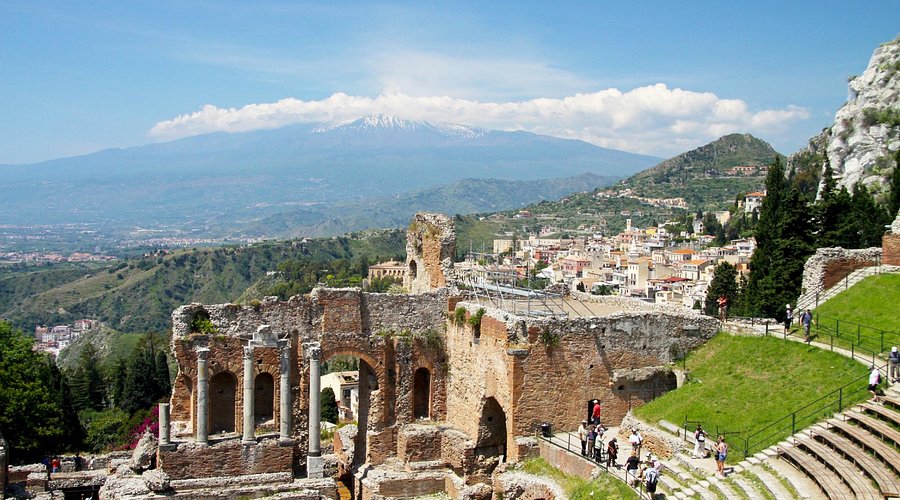
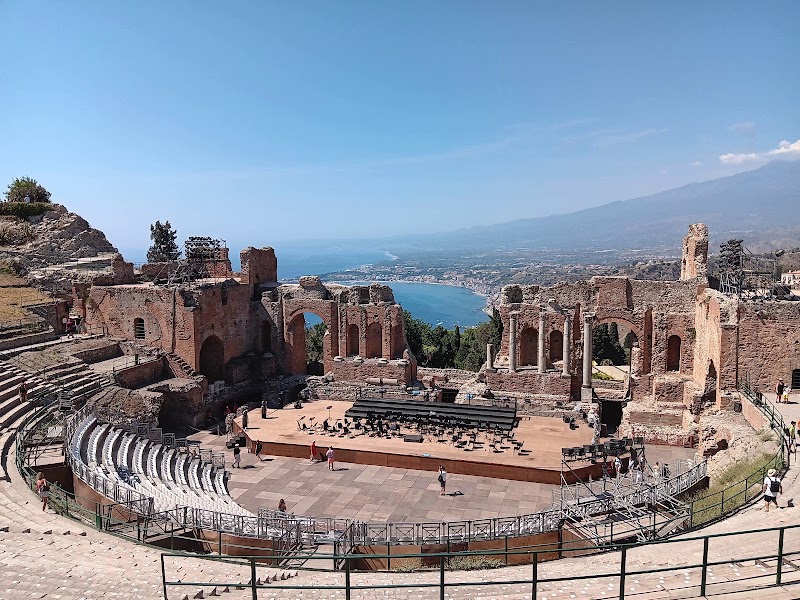
Stage Frame to Etna

Stage Frame to Etna

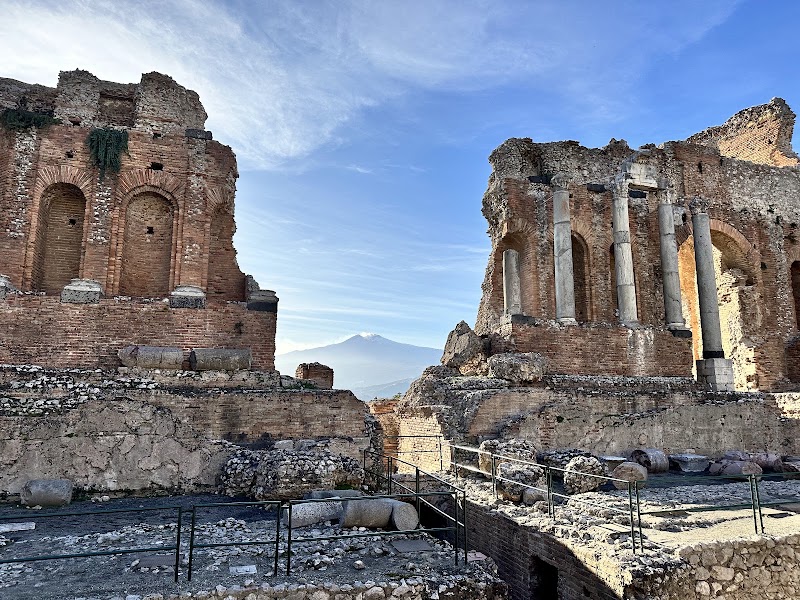
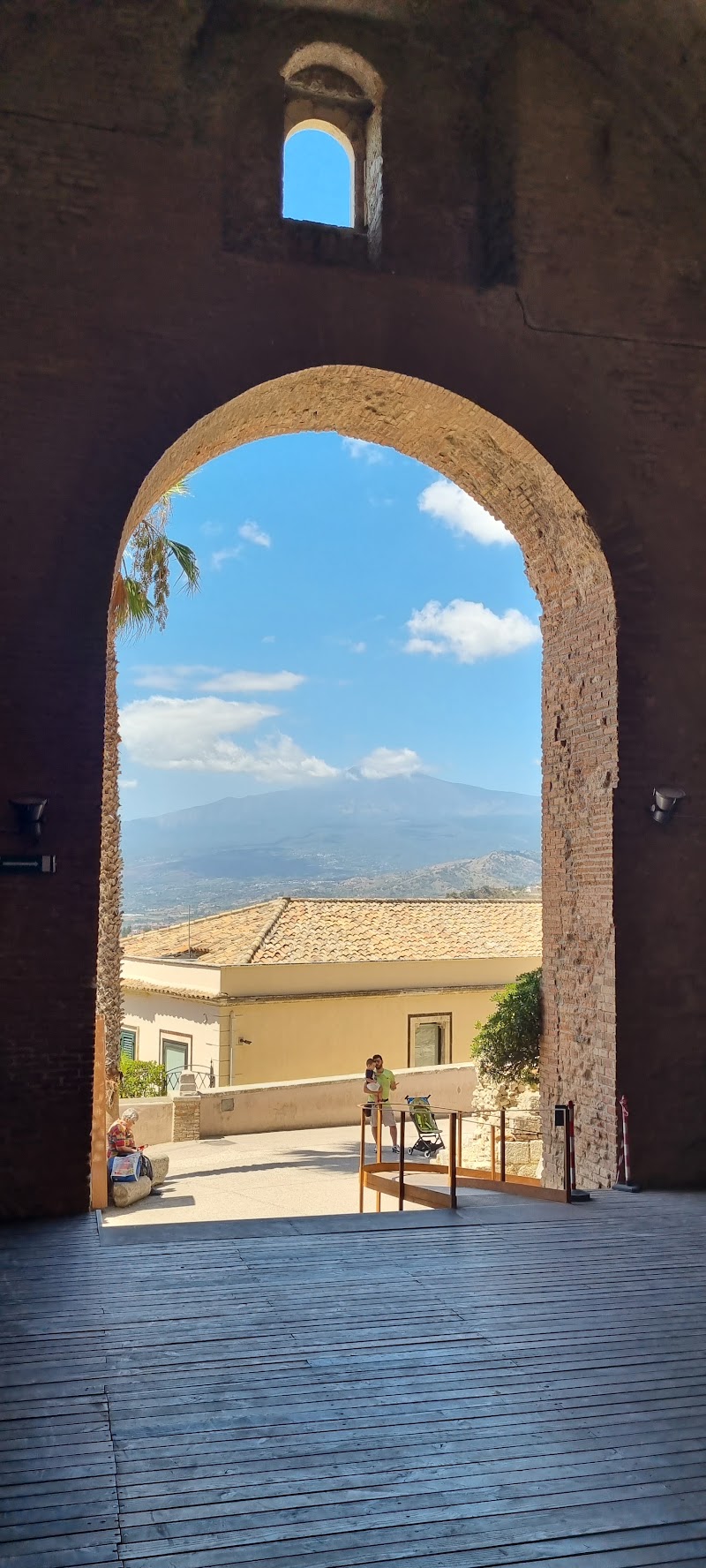
Where to find itStand near the stage wall and face outward through the proscenium opening toward Mount Etna and the sea.

Look forThe rectangular stage opening acting like a picture frame, with the volcano and coastline sitting inside it.

Why it matters · This is the theatre’s best trick: the ruins are not just remains, they are a deliberate frame for the landscape. Without stopping here, you miss how the site turns scenery into part of the architecture.
Look at this · 2 of 5
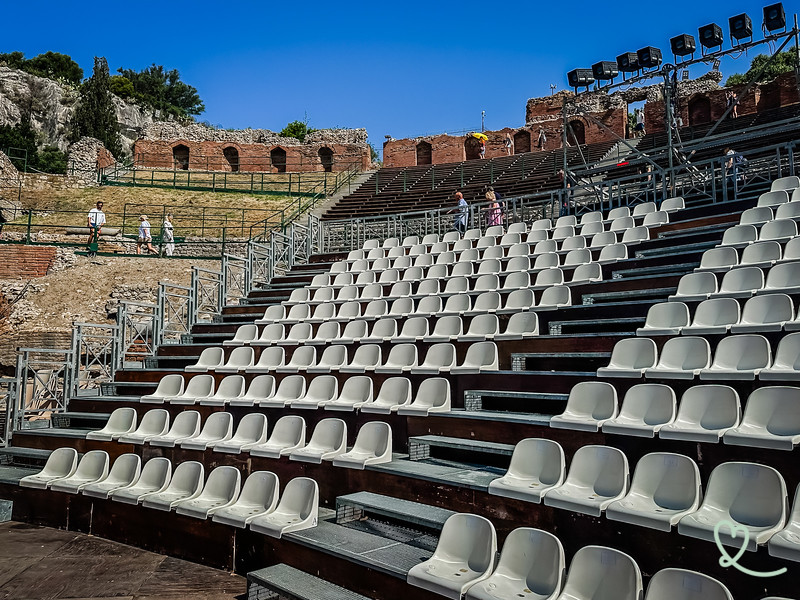
Upper Cavea Seats

Upper Cavea Seats

Where to find itWalk up to the highest surviving rows on the upper cavea and sit for a minute near the back edge.

Look forOld stone seating blocks, worn smooth in places, with the slope dropping away below you.

Why it matters · These seats show how the theatre still works as a place for looking and listening, not just walking through. You also get the quieter part of the site, where the acoustics and the scale make more sense.
Look at this · 3 of 5
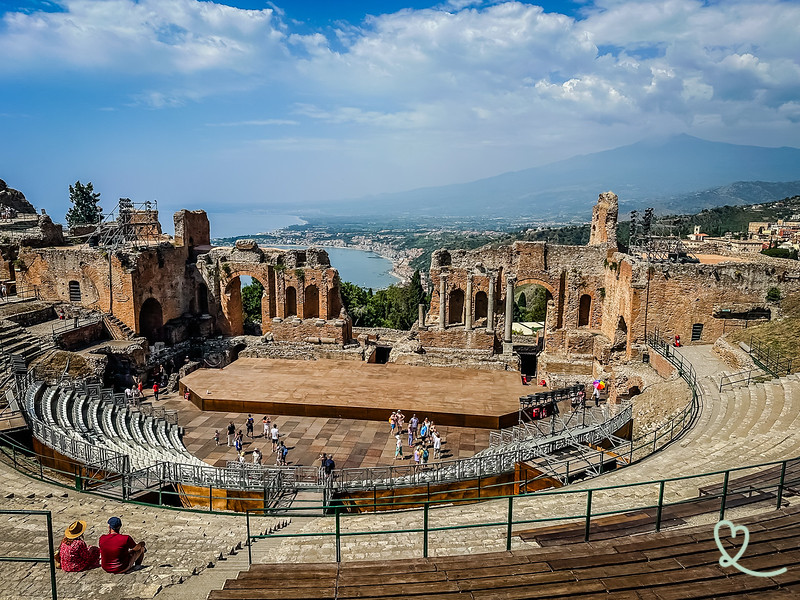
West-Side Viewline

West-Side Viewline

Where to find itMove to the west side of the seating curve and look diagonally across the orchestra toward the stage area.

Look forThe sweep of the curved cavea tightening the view into a controlled line across the ruins.

Why it matters · This side makes the theatre feel less like broken masonry and more like a machine for directing attention. It shows why the building mattered as a public stage, not merely as a scenic shell.
Look at this · 4 of 5
Roman Building Layer

Roman Building Layer

Where to find itLook at the masonry behind and around the theatre walls, especially where blocks change size, texture, or alignment.

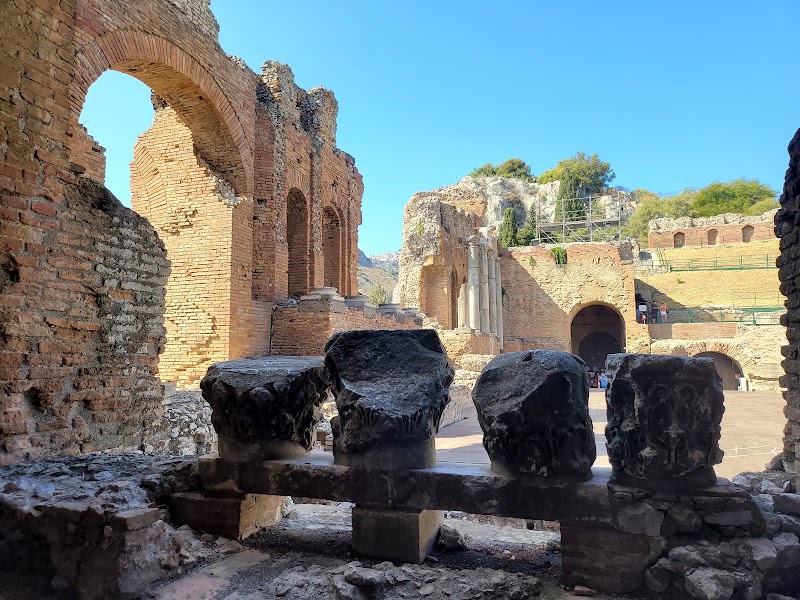
Look forA patchwork of stonework that does not all belong to one phase, with cleaner rebuilt sections interrupting older fabric.

Why it matters · That mismatch is the point: the site records reuse and rebuilding, not one frozen moment in Greek time. Without reading the wall surfaces, you miss the politics of who controlled and repurposed the place.
Look at this · 5 of 5
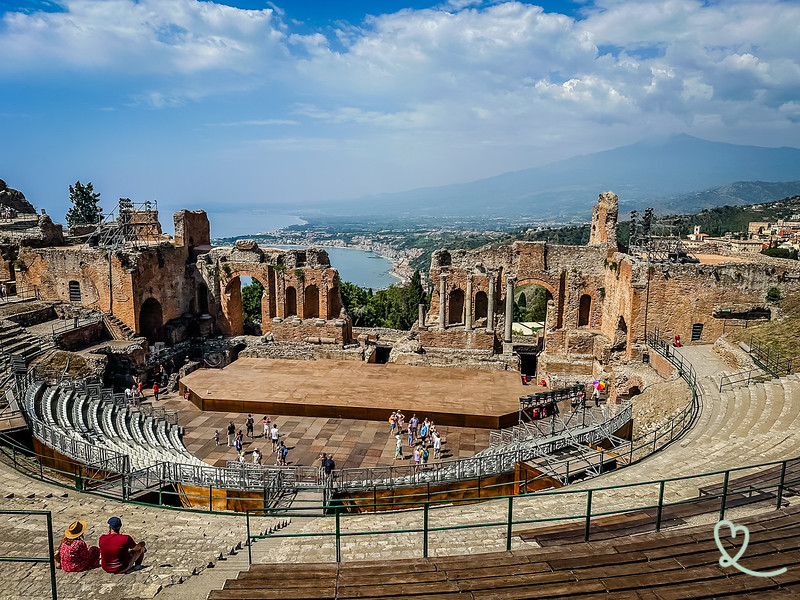
Orchestra Curve

Orchestra Curve

Where to find itStand at the lower edge of the seating bowl and look down into the semicircular orchestra.

Look forThe exact curve of the performance space and the way the stone steps wrap around it.

Why it matters · The curve reveals how tightly the theatre was engineered for sightlines and sound. It is easy to treat the lower bowl as empty space, but it is the core of how the whole place functions.
Photo gallery

What it looks like

Almost done · before you leave

Spot these

Find each one — tap to tick it off.

Done · time to eat

Nearby eat & drink

Filters

Section
Price
Max walking time
Minimum rating
Type

Specialty coffee

Third-wave roasters & quality espresso (worth a walk)
Coffee & bakery

Casual cafés and bakeries closest to here
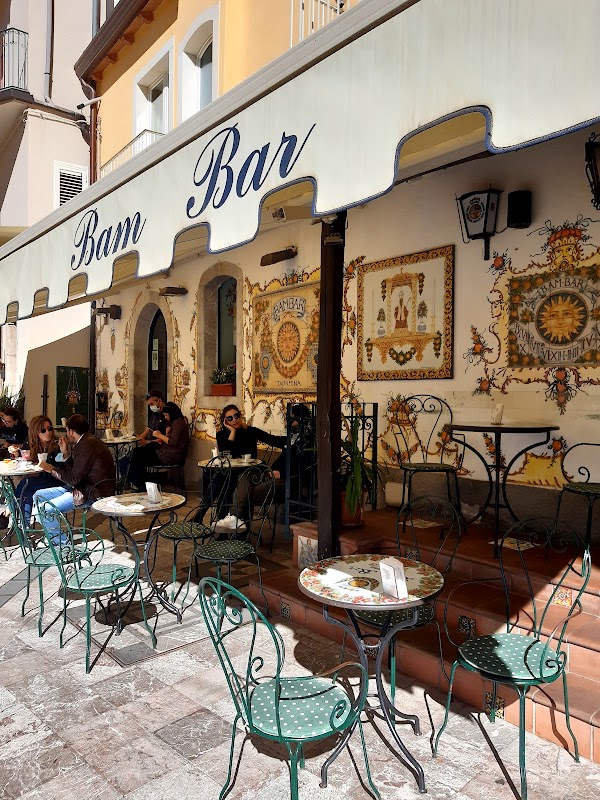
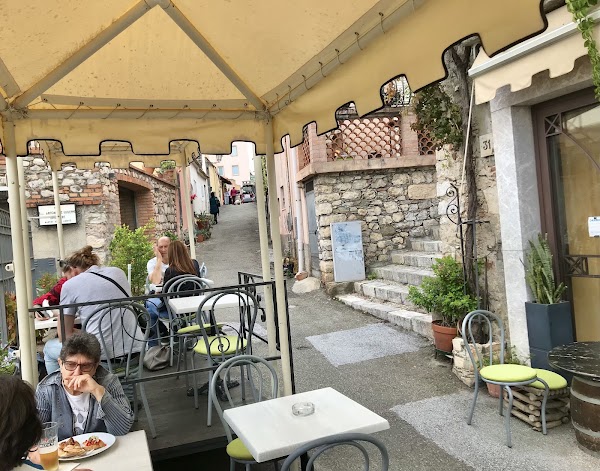
  • Bam Bar

    5 min walk
    ★ 4.5 (9.890) Bar

    Easygoing choice with outdoor tables & an arty vibe specializing in traditional granita.
    • almond granita
    • coffee and hazelnut granita
    • strawberry granita
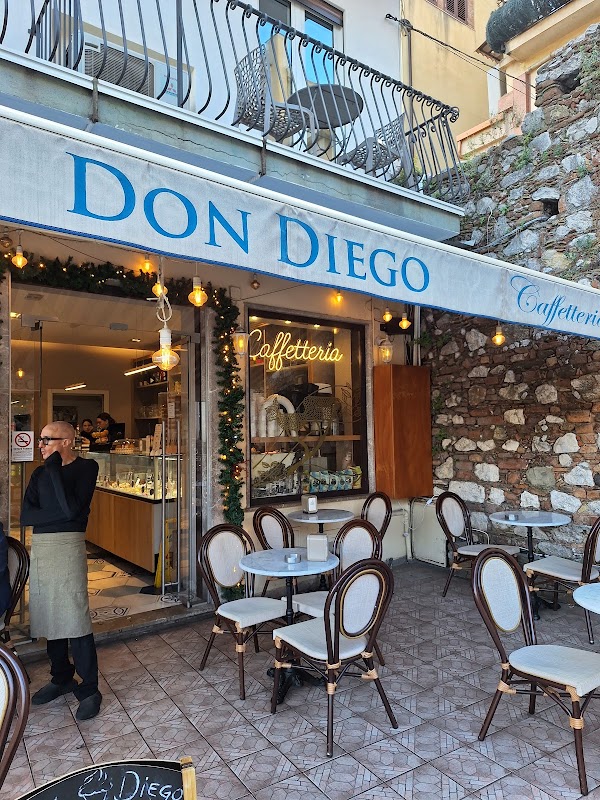
  • Don Diego Gelateria Caffetteria

    5 min walk
    ★ 4.7 (1.705) Ice Cream Shop
    • gelato
    • Sicilian granita
    • coffee
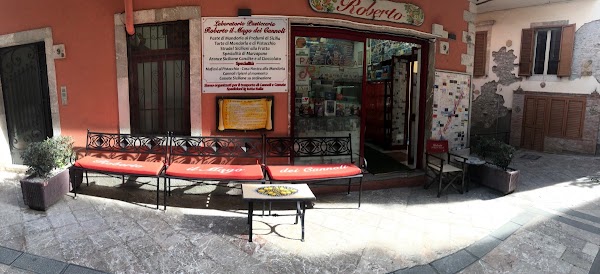
  • Laboratorio Pasticceria Roberto

    6 min walk
    ★ 4.7 (1.257) Pastry Shop
    • cannoli
    • cassata
    • sfogliatella
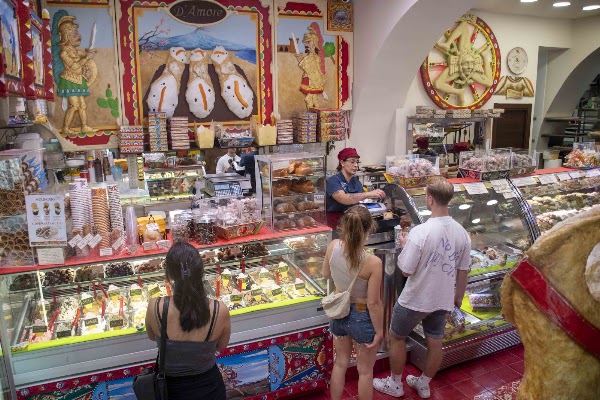
  • Pasticceria Gelateria D'Amore

    6 min walk
    ★ 4.7 (898) Dessert Shop
    • cannoli
    • paste di mandorla
    • gelato artigianale
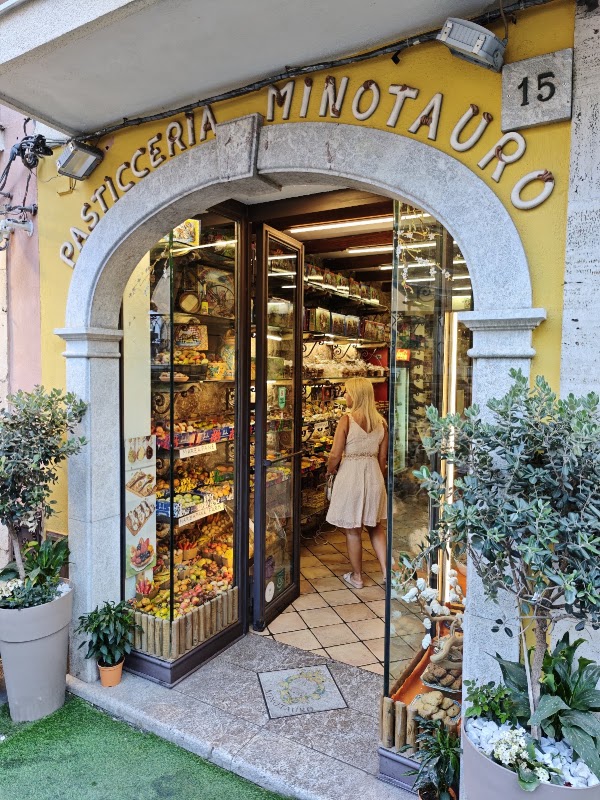
  • Minotauro Pastry Shop

    4 min walk
    ★ 4.7 (587) Pastry Shop
    • cannoli
    • Martorana fruit
    • almond pastries

Lunch

Sit-down lunch spots

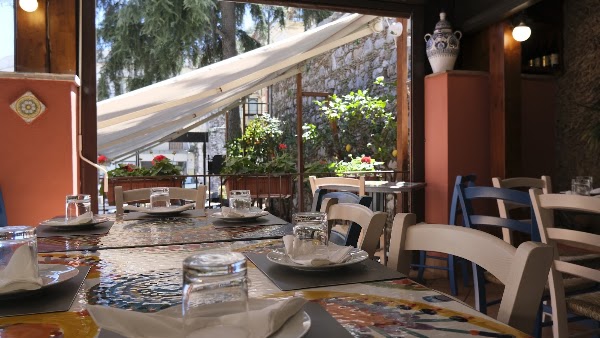
  • Ristorante Pizzeria Porta Messina

    6 min walk
    ★ 4.7 (13.888) €€ Restaurant

    Rustic venue with a leafy terrace, offering traditional Sicilian cuisine, plus cooking classes.
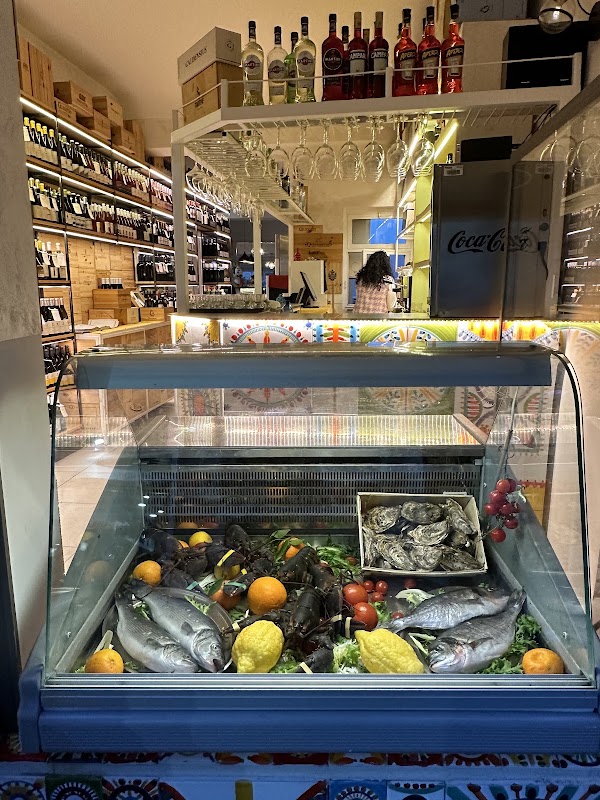
    • Fritturine Trocadero
    • Caponata antica e parmigiana di melanzane
    • Involtini di spada su letto di verdurine
  • Ristorante Pirandello 2.0

    6 min walk
    ★ 4.8 (5.093) €€€ Restaurant
    • Cozze Scoppiate con Crostini di Pane Saporito
    • Polpo alla Siciliana con Olive, Pomodorini, Salsa di Pomodoro
    • Gamberoni in Pasta Kataifi e Salsa Teriyaki
  • Osteria da Rita (dal 1991)

    6 min walk
    ★ 4.5 (4.434) €€ Italian Restaurant
    • spaghetti da za rita
    • pasta alla norma
    • involtini di pesce spada
  • La Plage Resort

    32 min walk
    ★ 4.5 (2.986) Hotel

    Modern rooms and suites in a seasonal resort offering a restaurant, a beach club & a spa.

    • swordfish prepared two ways
    • house-made pasta with sea urchin
    • mini arancino al nero di seppia
  • Osteria Villa Zuccaro

    5 min walk
    ★ 4.6 (2.823) €€€ Italian Restaurant
    • Spaghetti alle vongole
    • Involtini di melanzane con spaghetti alla Gattopardo
    • Scrigni agli scampi con bisque di gamberi e chips di zucchine

Dinner

Where to land in the evening

  • Ristorante Pizzeria Porta Messina

    6 min walk
    ★ 4.7 (13.888) €€ Restaurant

    Rustic venue with a leafy terrace, offering traditional Sicilian cuisine, plus cooking classes.
    • Fritturine Trocadero
    • Caponata antica e parmigiana di melanzane
    • Gnocchi al pesto di pistacchio, burrata DOP e pomodori secchi
  • Ristorante Pirandello 2.0

    6 min walk
    ★ 4.8 (5.093) €€€ Restaurant
    • Polpo alla Siciliana con Olive, Pomodorini, Salsa di Pomodoro
    • Spaghetti ai 3 Pomodori Siciliani e Basilico
    • Catalana di Astice 2.0
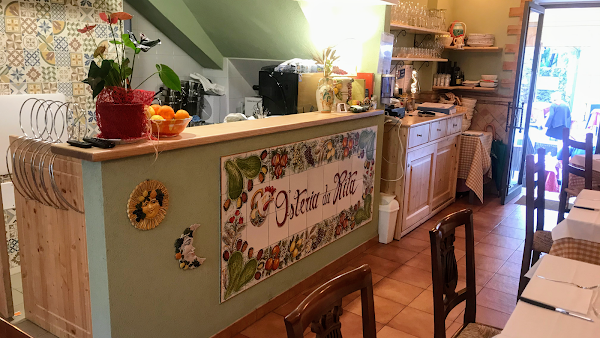
  • Osteria da Rita (dal 1991)

    6 min walk
    ★ 4.5 (4.434) €€ Italian Restaurant
    • Spaghetti da Za Rita
    • Pasta alla Norma
    • swordfish involtini
  • La Plage Resort

    32 min walk
    ★ 4.5 (2.986) Hotel

    Modern rooms and suites in a seasonal resort offering a restaurant, a beach club & a spa.
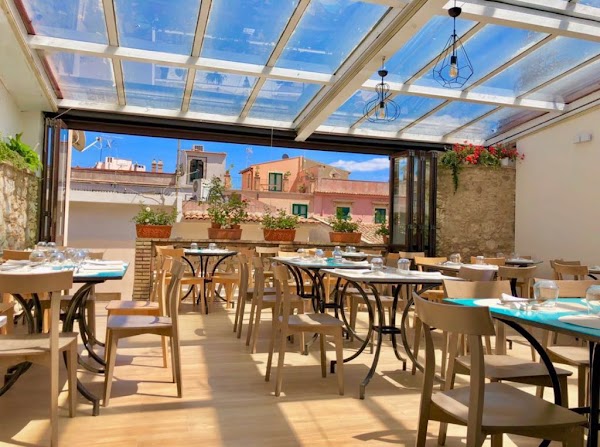
  • Osteria Villa Zuccaro

    5 min walk
    ★ 4.6 (2.823) €€€ Italian Restaurant
    • Involtini di melanzane con spaghetti alla Gattopardo
    • Spaghetti alle vongole
    • Involtino di pesce spada con mollica alle olive verdi, capperi e agrumi serviti con insalata di finocchi e arance

Quick grab

Fast food & takeaway for when you just need something fast
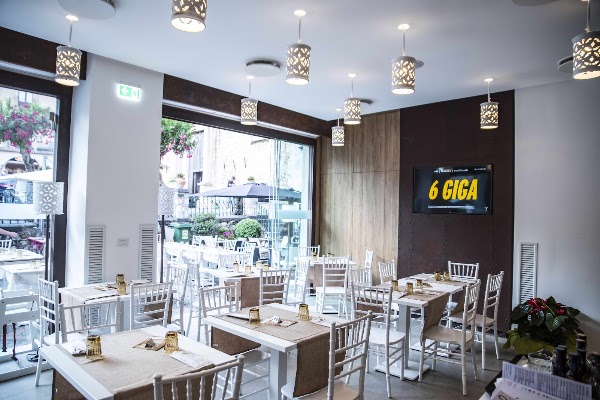
  • Osteria Sànicolò Pizzeria Taormina

    14 min walk
    ★ 4.0 (786) €€ Restaurant
    • Calzone Sànicolò
    • Spaghetti scogliera
    • Tartara di tonno
  • stritFUD

    5 min walk
    ★ 4.4 (751) Fast Food Restaurant
    • arancini
    • scacciata
    • calzones
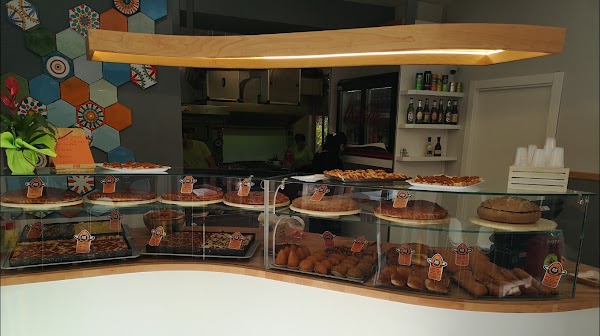
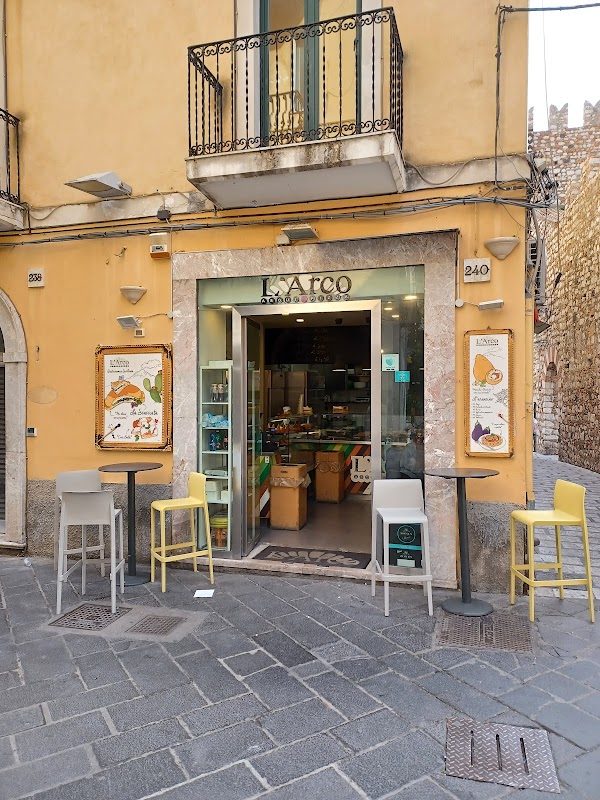
  • L'Arco - About Pizza

    14 min walk
    ★ 4.5 (549) Deli
    • arancini
    • pizza margherita
    • capricciosa
  • Bar Capriccio Snack Gelateria

    7 min walk
    ★ 4.3 (539) Ice Cream Shop
    • gelato artigianale
    • granita siciliana
    • cannoli con la ricotta
  • Ottospikki

    43 min walk
    ★ 4.8 (272) €€ Pizza Restaurant
    • MARGHERITA DOP
    • SESTO SENSO
    • DIAMANTE

Searched, none found within range: Familiar chains / fast food. The nearest fast food is likely in the closest town.

Practical info

GPS 37.8525, 15.2924
Typical duration (min) 90

More about this place

Taormina’s ancient theatre is a palimpsest rather than a pure Greek survival: the original layout belongs to the III/II century BC, with Hellenistic origins, but the structure we read today is largely Roman in fabric and ambition[8][12]. The first Greek phase was cut directly into the rock of Monte Tauro, in the standard Hellenistic mode of the cavea, orchestra, and skene; later Roman rebuilding in the first quarter of the 2nd century AD expanded the seating and reconstructed the scaenae frons, and a further 3rd-century AD phase altered the stage area and turned the orchestra into an arena for gladiatorial games[1][9]. That sequence matters: Taormina is not simply “Greek” or “Roman,” but a theater whose political history is written in masonry, from Sicilian Greek colony to imperial entertainment machine[2][8].

Architecturally, it belongs to the great Mediterranean family of rock-cut theaters, but it is unusually hybrid. Its curving cavea marks a later Greek-Hellenistic tendency away from older trapezoidal plans, while the Roman interventions align it more closely with imperial theaters adapted for spectacle than with the purely dramatic spaces of the Greek world[4][12]. The result is a building that sits between peers: less pristine than Syracuse, arguably more dramatic in setting than many of its Roman cousins, and valuable precisely because its phases are legible rather than smoothed into one style[1][2]. The ancient structure’s endurance also explains why modern scholarship keeps returning to it: it is one of the clearest cases in Sicily where architecture records not just performance, but conquest, reuse, and changing public taste[1][9].

Sources: