Day 7 · Baroque South-East
Spiaggia di San Lorenzo
Step 1 · Before you enter · ~15 sec

Spiaggia di San Lorenzo

★ 4.4 (6,762) Maps ↗

At San Lorenzo, the thing to notice isn’t the sand; it’s the promenade almost three kilometres long, where Gijón’s shoreline reads like a public ledger of the city itself.[1][14] At low tide, the beach opens from 40,000 square metres to 240,000, which means the same walk can feel like two different coastlines in one afternoon.[7]

Stand outside · play the audio first, then read on.

Step 2 · The story · ~2 min

Why this place matters

In Gijón, San Lorenzo beach matters less as scenery than as a place where the city learned to negotiate with the sea. In the 19th century, locals saw it as a rough stretch of sand, dangerous with strong tides and wind, until 1874, when the first seaside bathhouse opened and turned the shoreline into a health resort; by the late 1800s, that same shore was being reimagined as part of the city’s growth rather than its edge.

The turning point came with the seawall project championed by Gaspar Melchor de Jovellanos, the Enlightenment writer and reformer who had walked these coasts and argued for holding the sea back so Gijón could expand. The wall was not finished until the first decade of the 20th century, but it changed the beach’s role completely: from exposed waterfront to urban promenade. That is why San Lorenzo still feels engineered as much as natural. A visitor can still stand on the curved walk above the sand and see the Escalerona, the monumental stairway built in 1933 to handle the crowds, a concrete reminder that this beach has always been about access, not just admiration.

Read more →
Step 3 · Going in

Here's how

Best time to visit

Go early or late, because the useful parking and the best stretch of open sand fill fast. If everyone is content after lunch, staying put is the smarter choice than forcing one more move.

Entry strategy

There is no ticketed entrance for the beach itself, but some lidos charge for loungers or their own facilities. Use whichever access point gets you to the free strip or the lido you actually want, and keep one person free for parking or bags.

Recommended route

Walk the shoreline first to choose between the open beach and the managed lido section, then set up close enough to the water for an easy rinse later. Before driving back, use the wash-off point and change on site so the car does not inherit the beach.

Tap ⓘ at the top right anytime for hours, address, prices.

Look at this · 1 of 5
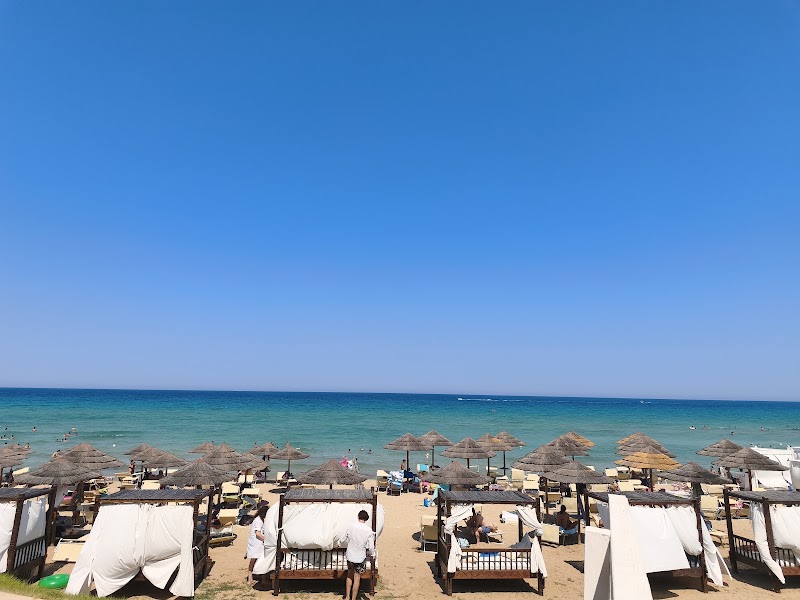
Public sand vs lido edge

Public sand vs lido edge

Where to find itStand near the seam where the open beach gives way to the first row of lidos, then look back along the shoreline.

Look forThe sand changes from open, do-it-yourself space to a denser strip with loungers, umbrellas, and service counters.

Why it matters · That line tells you how San Lorenzo actually works: part free beach, part managed beach club. Without noticing it, you miss the social geography of the place, which is the whole point of standing here.
Look at this · 2 of 5
Fine sand underfoot

Fine sand underfoot

Where to find itWalk a few steps from the waterline onto the driest upper sand and look down before you settle.

Look forSand that looks finer and more even than the coarser stuff at Fontane Bianche.

Why it matters · This is the difference your feet notice first and your eyes miss second. It explains why people linger here for an easier, cleaner beach setup.
Look at this · 3 of 5
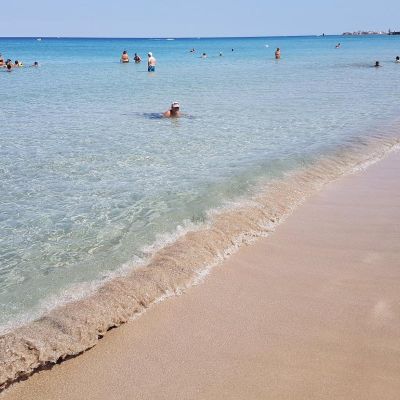
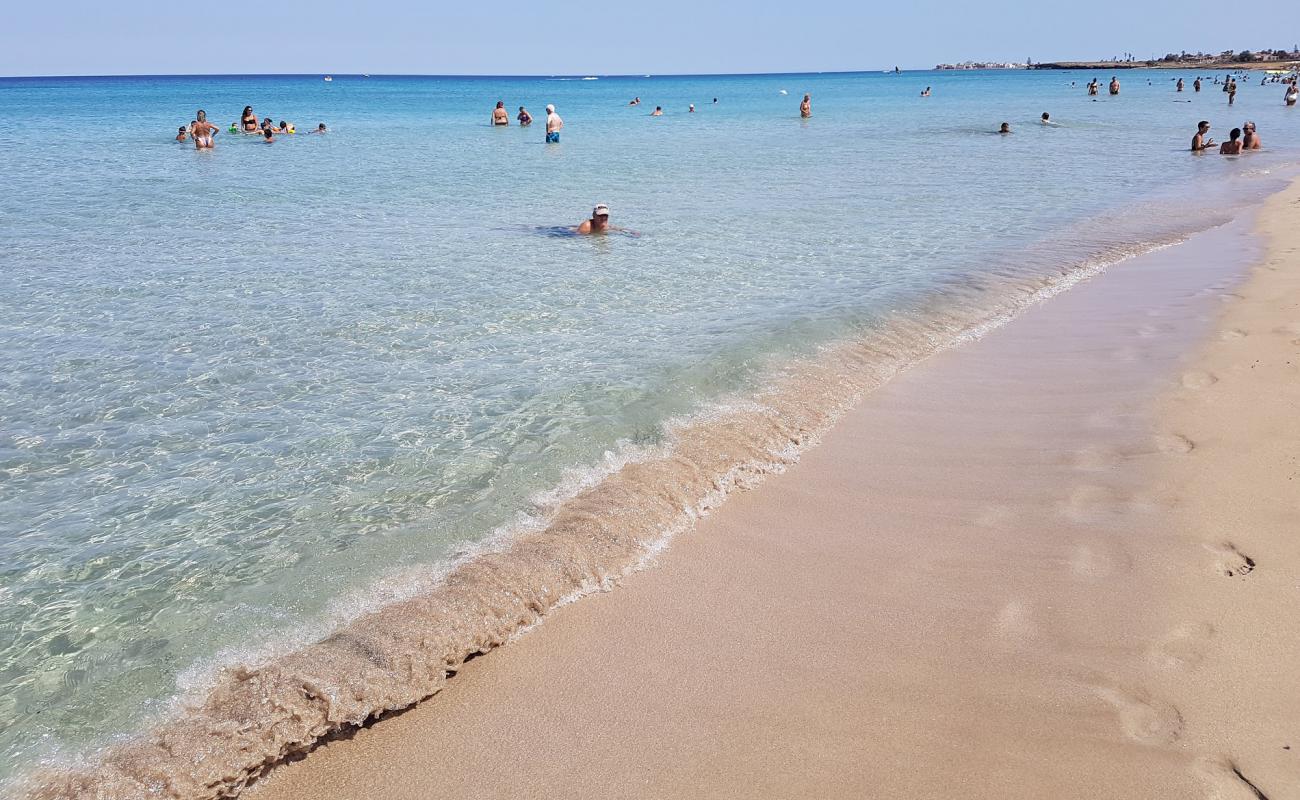
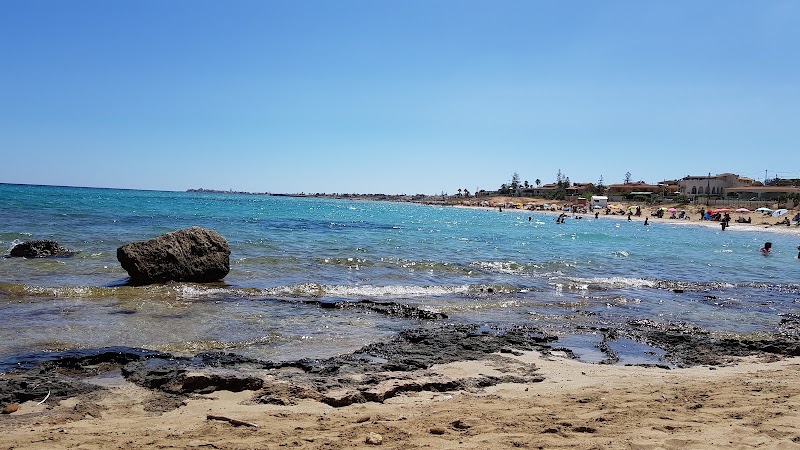
Clear water band

Clear water band

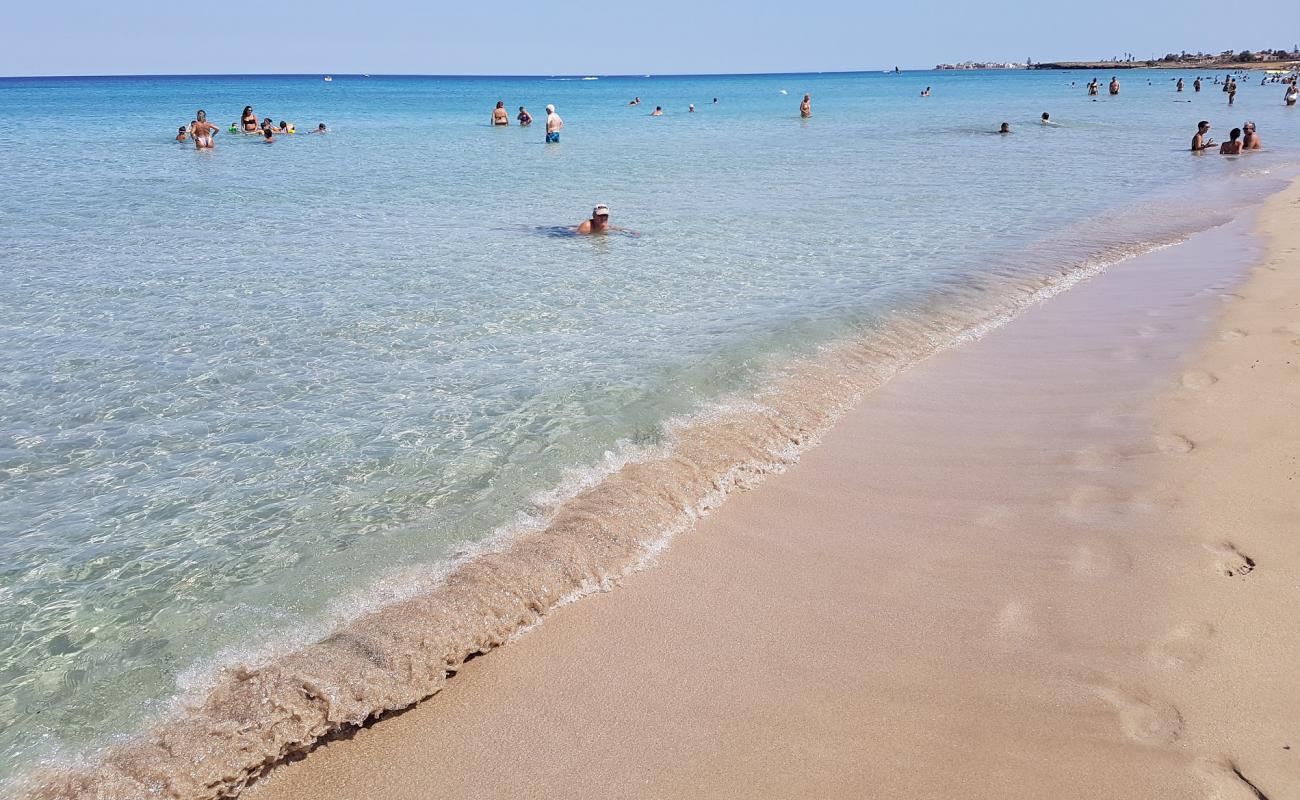
Where to find itFace straight out from the shore in the flattest, sunlit section of water.

Look forA pale turquoise band close in, then a darker, cleaner-looking blue beyond it.

Why it matters · San Lorenzo earns its reputation in that color change, not in some abstract claim of a nice sea. If you only glance once, you miss how clearly the bottom and depth read from the beach.
Look at this · 4 of 5
Parking-side arrival

Parking-side arrival

Where to find itLook inland behind the first beach access road and along the shoulder near the entrance strip.

Look forCars tucked into small lots or squeezed along the road rather than one grand formal parking area.

Why it matters · That tells you why timing matters here. The better spots and the easiest parking go early, and by late morning the place starts to feel crowded in a very practical, not romantic, way.
Look at this · 5 of 5
Rinse-and-go point

Rinse-and-go point

Where to find itBefore getting in the car, find the shower or rinse area attached to the lido or nearby beach service point.

Look forA simple wash-off station, changing area, or tap set back from the sand.

Why it matters · For a family moving on after lunch, this is the difference between a tolerable drive and sand everywhere in the car. It is the small coast-life detail that saves the rest of the day.
Photo gallery

What it looks like

Almost done · before you leave

Spot these

Find each one — tap to tick it off.

Done · time to eat

Nearby eat & drink

Filters

Section
Price
Max walking time
Minimum rating
Type

Quick grab

Fast food & takeaway for when you just need something fast
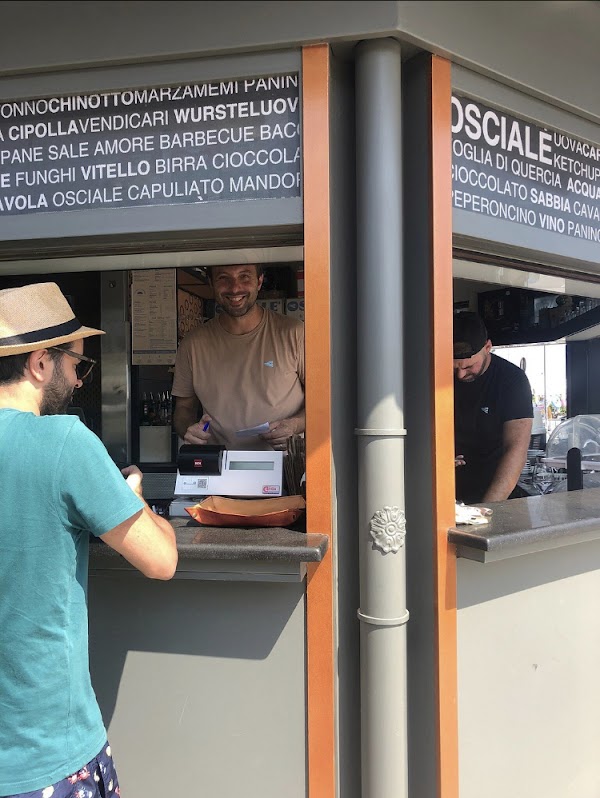
  • Oscialè Street Food

    6 min walk
    ★ 4.6 (1.330) Bar & Grill
    • Panelle
    • Patatine Bacon & Cheddar
    • Patatine & formaggio
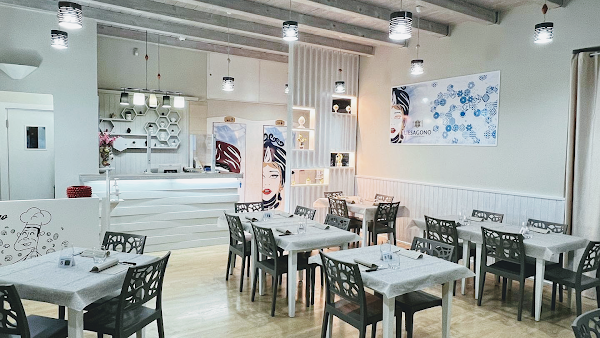
  • L' ESAGONO RISTORANTE PIZZERIA

    20 min walk
    ★ 4.4 (705) €€ Restaurant
    • pizza
    • risotto with seafood
    • pork medallions and spinach
  • Rosticceria Al Vecchio Mercato

    28 min walk
    ★ 4.7 (521) Takeout Restaurant
    • quattroformaggi
    • fritella con ricotta dolce
    • tagliere del vecchio mercato
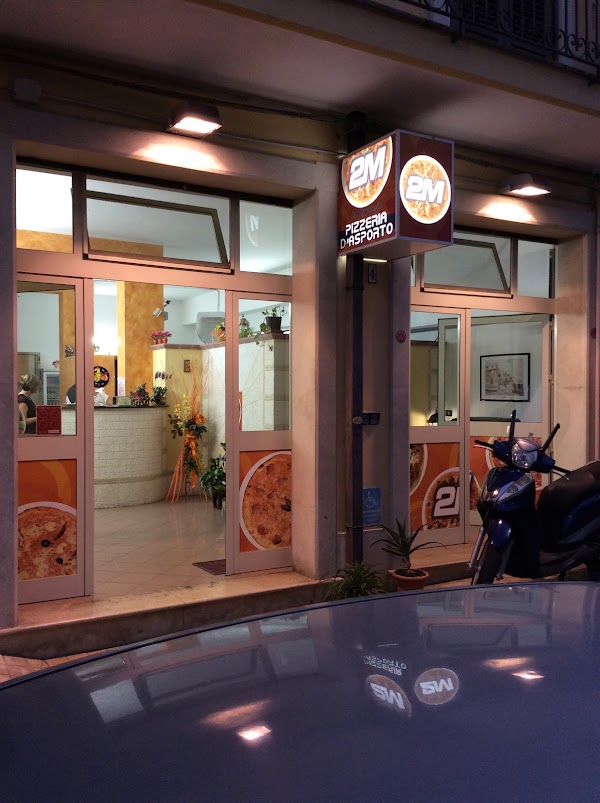
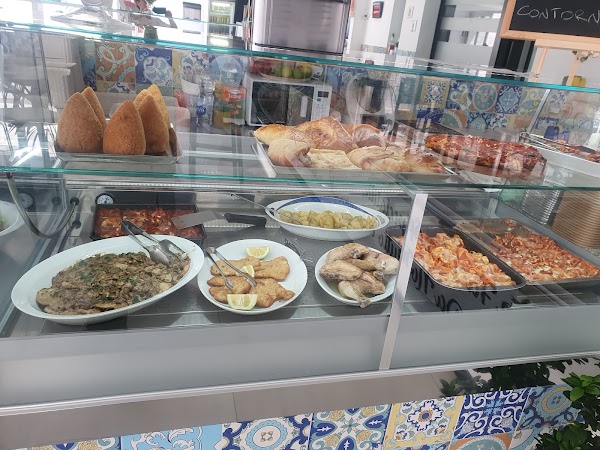
  • Pizzeria 2M Peppuccio e Paolo Miranda

    27 min walk
    ★ 4.8 (331) Takeout Restaurant
    • La Mia Margherita
    • Assoluto di Melanzane
    • Seuperpomodoro
  • Rosticceria Pizzeria Pizzoleria La Fenice di Ignogna - Avola

    15 min walk
    ★ 4.5 (203) Pizza Restaurant
    • La Fenice
    • Pizzolo con crema di zucca
    • Rollò di pizza

Searched, none found within range: Specialty coffee · Coffee & bakery · Lunch · Dinner · Familiar chains / fast food. The nearest fast food is likely in the closest town.

Practical info

GPS 36.9046, 15.1636
Typical duration (min) 90

More about this place

San Lorenzo beach in Gijón is less a strip of sand than a civic project that happened to become a seaside landscape. The decisive intervention was the Muro, the promenade begun on 3 June 1907 and completed in 1915, with the first 567 meters designed by the municipal architect Miguel García de la Cruz; he also drew the balustrade that had to be finished around tides and delays, which is a good reminder that modern urban design often depends as much on engineering patience as on style[1]. The beach’s public face took another turn in 1933 with the monumental staircase known as the Escalerona, designed by José Avelino Díaz y Fernández Omaña as a rationalist work[2]. Its clean geometry belongs to the interwar vocabulary of utility and order, yet it was also a local answer to a practical problem: how to move crowds between the promenade and the sand without turning the shoreline into a scramble. In that sense, it sits closer to civic infrastructure than to seaside ornament, and it is more revealing than decorative; the city made access look dignified, which is a very different ambition.

The politics of San Lorenzo are written into its paving. The promenade completed a long-standing aspiration for Gijón, linking the city’s growth to the management of the coast rather than to retreat from it[1][2]. Later reforms show how each generation re-edited the same public room: a 1951 redesign introduced new pavement, concrete pergolas, and layouts shaped by the rise of car traffic, while a 1991–93 redesign brought another architectural reset under Diego Cabezudo[1]. That sequence matters because it places San Lorenzo among the few Spanish beachfronts whose identity is built through repeated municipal revision, not a single grand gesture. The result is a shoreline that reads like a timeline of urban priorities: early-20th-century promenade optimism, 1930s rationalism, mid-century motor planning, and late-century reconstruction[1][2].

Sources: