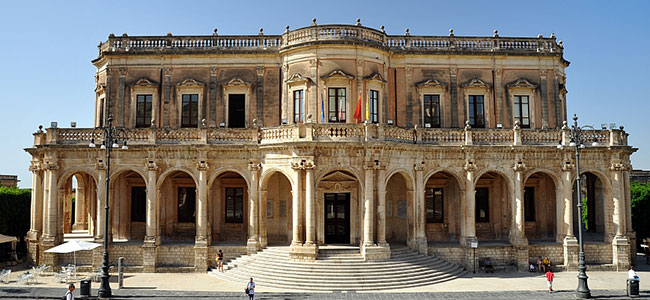
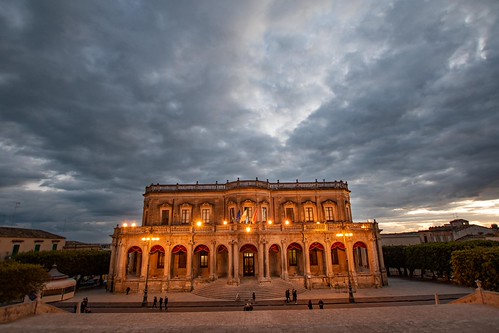
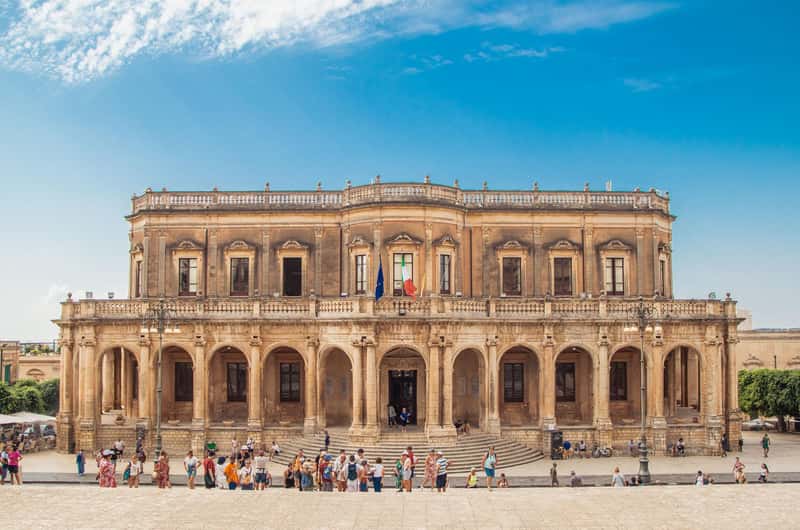
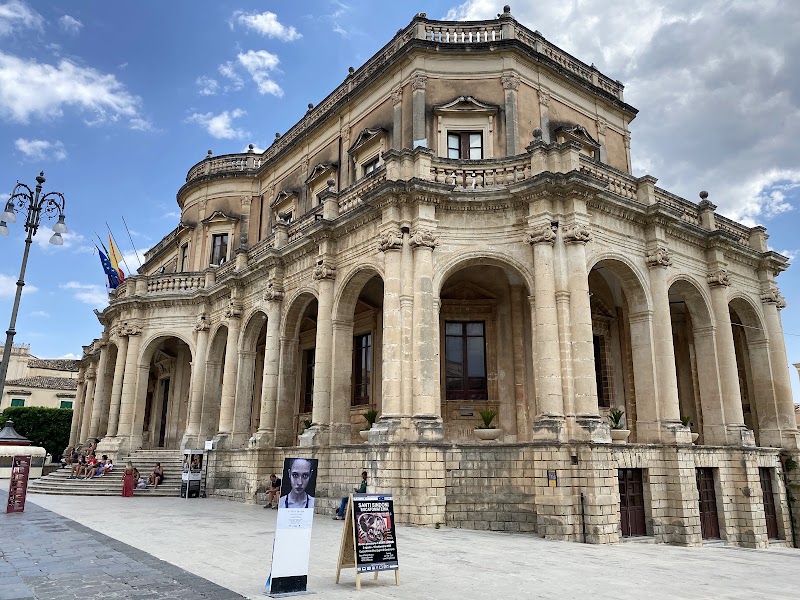
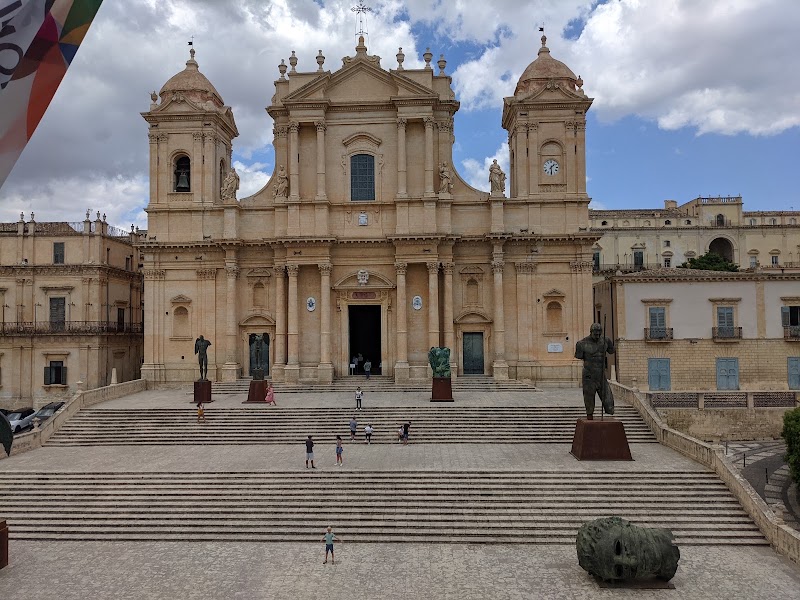
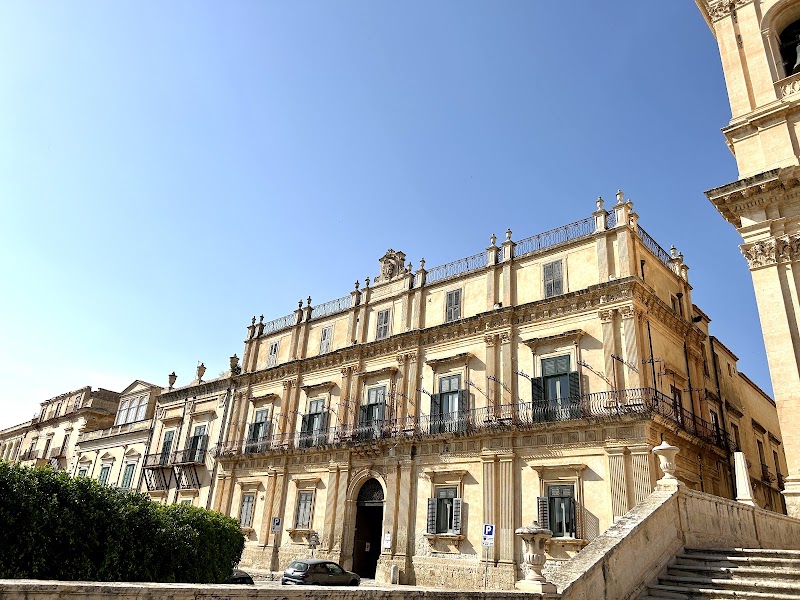
Palazzo Ducezio matters because it turns Noto’s post-earthquake rebuild into a civic statement. Vincenzo Sinatra began the palace in 1746, but the work dragged on so long that the main body was not largely complete until about 1760, and the ground floor alone only reached completion in 1830; in other words, this was not a quick baroque flourish but an eighty-four-year municipal project[3][12][15].
That slow build is the point. Noto was being remade after the 1693 earthquake, and the palace was placed on Piazza Municipio, directly facing the cathedral, so the town’s secular power would stand opposite its religious power rather than hide behind it[2]. The building was later finished with a second storey in 1949–1951 by Francesco La Grassa, but the room visitors remember best, the Sala degli Specchi, began life as a small theatre and then became the council chamber before being dressed in mirrors, stucco, and a neoclassical ceiling fresco by Antonino Mazza in 1826[2][13]. Today, you still see that long argument between practicality and display in the colonnaded ground floor and in the mirrored hall above, where Noto’s government still meets[11][15].
Read more →