Day 9 · Loire Valley
Château de Villandry
Step 1 · Before you enter · ~15 sec

Château de Villandry

★ 4.7 (20,373) €36 Maps ↗ Website ↗

You are standing at a place where the chateau and the gardens are meant to be read together, not separately. Look closely, because the lines of the beds, the water, and the stone all work like one big Renaissance design.

Stand outside · play the audio first, then read on.

Step 2 · The story · ~2 min

Why this place matters

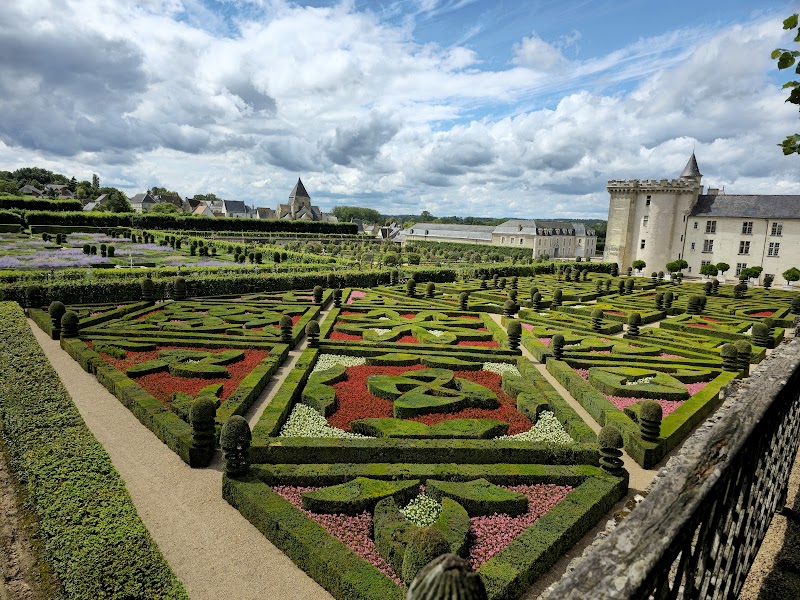
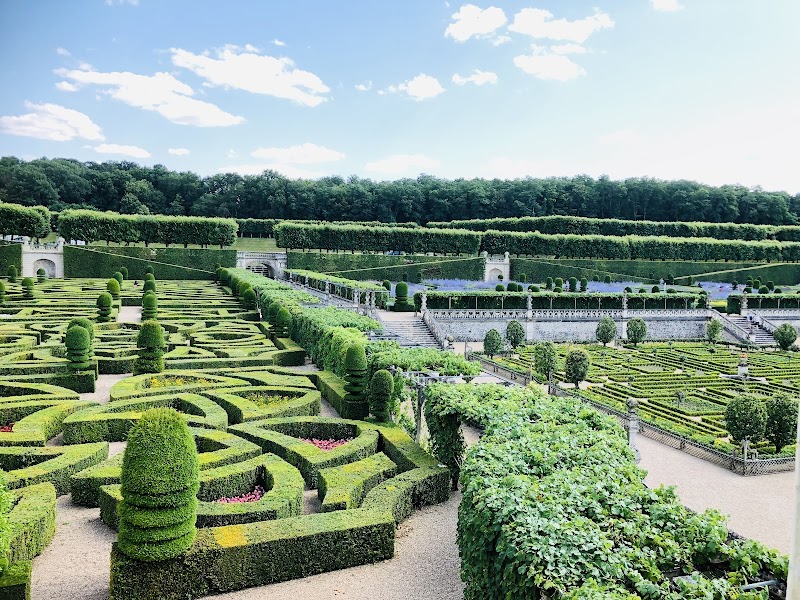
Chateau de Villandry exists because Renaissance builders wanted beauty, food, and order to belong to the same world. That idea is still easy to see here: the water garden, sun garden, ornamental kitchen garden, and herb garden all sit in crisp geometric panels, shaped by low box hedges and carefully planned lines. A family restored this estate in the early 20th century, and that rescue is why these gardens survive so clearly today. If you are here in the morning, the light makes the patterns sharper and the colors calmer, so this is the best time to walk slowly and let the design unfold. One thing people miss is the view from upstairs in the chateau, where you can look back over the gardens and see how the whole place was composed. For this visit, the practical side is easy too: parking is free, and the family cost is straightforward at 14 euros per adult and 8 euros for Melek.

Read more →
Step 3 · Going in

Here's how

Best time to visit

Go in the morning if you can, because the gardens read best in slanted light and the site is busier later in the day. In July, the château opens at 09:00, so early arrival gives you cleaner views and more space.

Entry strategy

Buy the combined château-and-gardens ticket if you want the full visit; the normal adult price is €14 and Melek’s ticket is €8 for ages 8–18. Parking is free, and if you are doing both parts, start with the château before its interior closes, then move out to the gardens.

Recommended route

Do the château first, including the upstairs garden views, then spend your time in the gardens. In the gardens, move in this order: water garden, sun garden, ornamental kitchen garden, and herb garden, so you see how the geometry changes from one formal space to the next.

Tap ⓘ at the top right anytime for hours, address, prices.

Look at this · 1 of 4
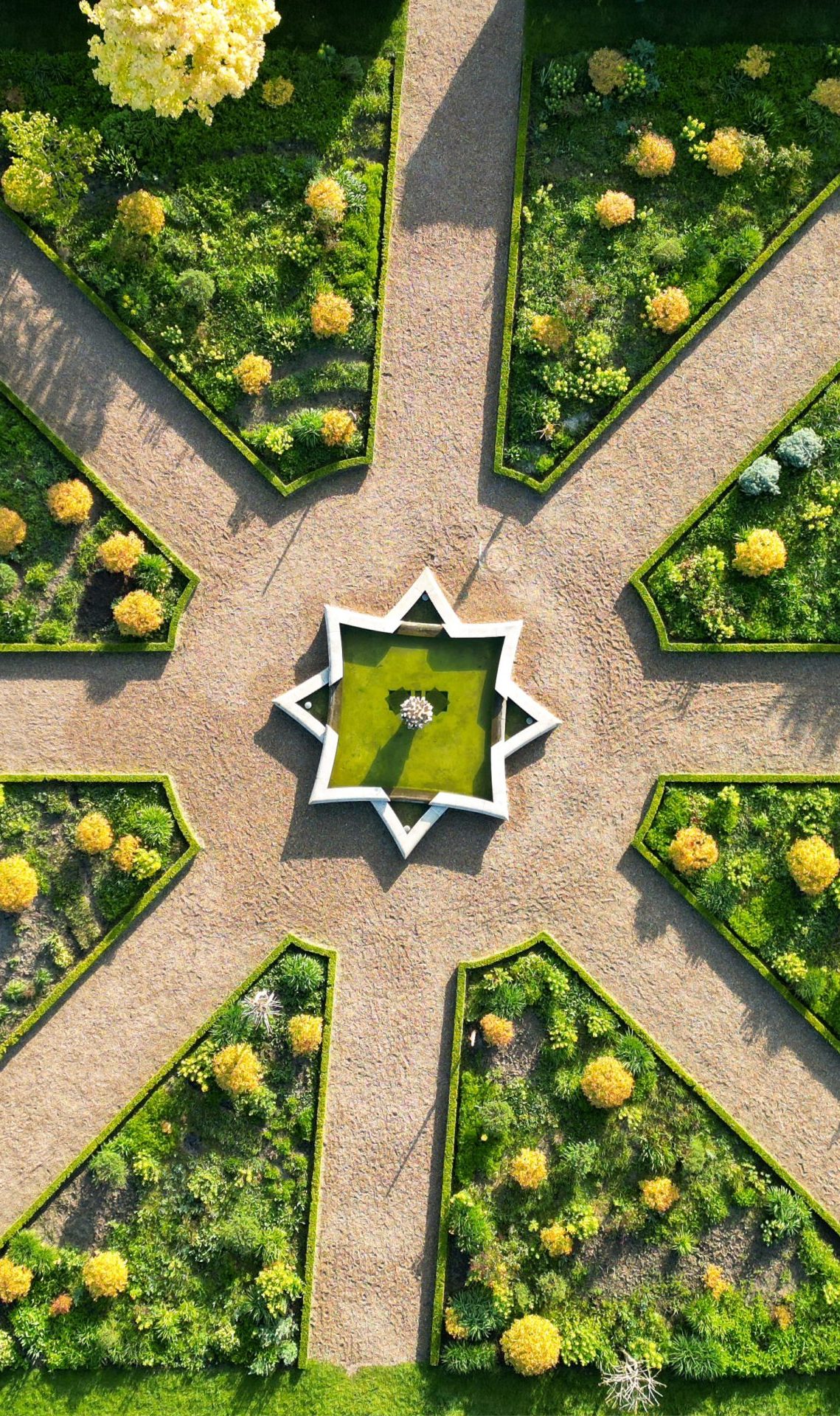
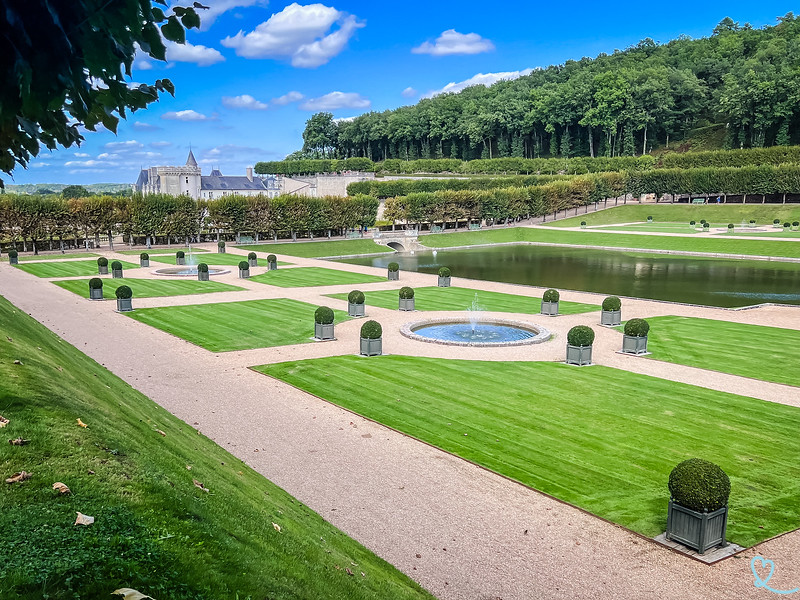
Water Garden Terrace

Water Garden Terrace

Where to find itStand at the upper edge of the main terrace above the water garden, where you can look straight down into the formal layout.

Look forA precise mirror-like basin framed by clipped hedges and straight lines.

Why it matters · This is where Villandry’s design reads as architecture, not just planting. Without that high viewpoint, the water garden looks pleasant; from here, you see the geometry that makes it part of the whole estate.
Look at this · 2 of 4
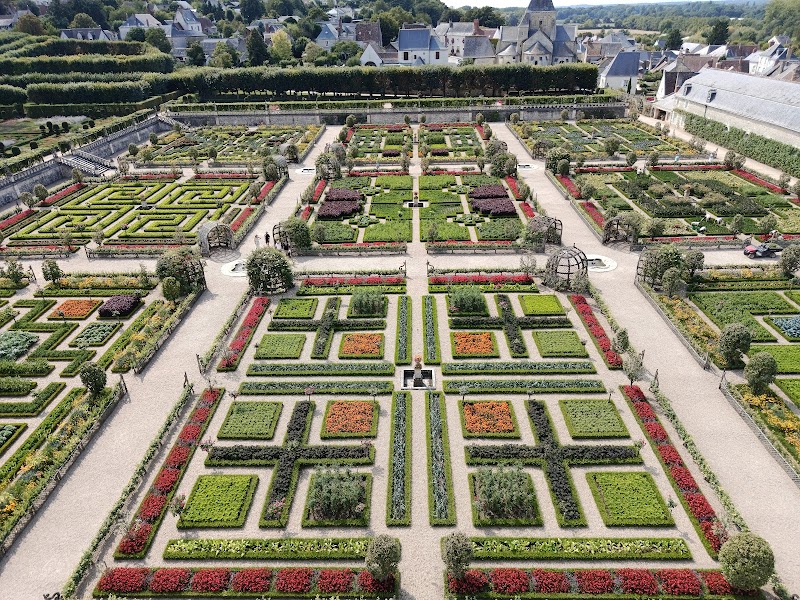
Sun Garden Panels

Sun Garden Panels

Where to find itWalk to the viewpoint facing the sun garden and stop where the full pattern fills your sightline.

Look forRound, fan-like compartments and sharp borders made by low box hedges.

Why it matters · The low hedges are doing the real work here: they turn color into a drawn pattern. If you only look at the flowers, you miss the fact that the garden is composed like a page of ornament.
Look at this · 3 of 4
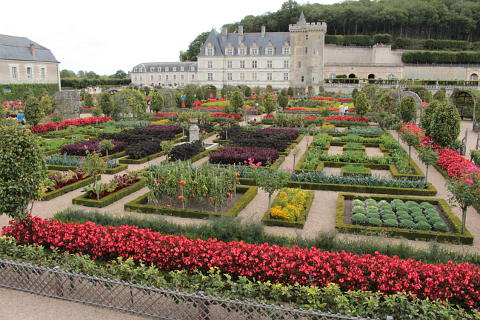
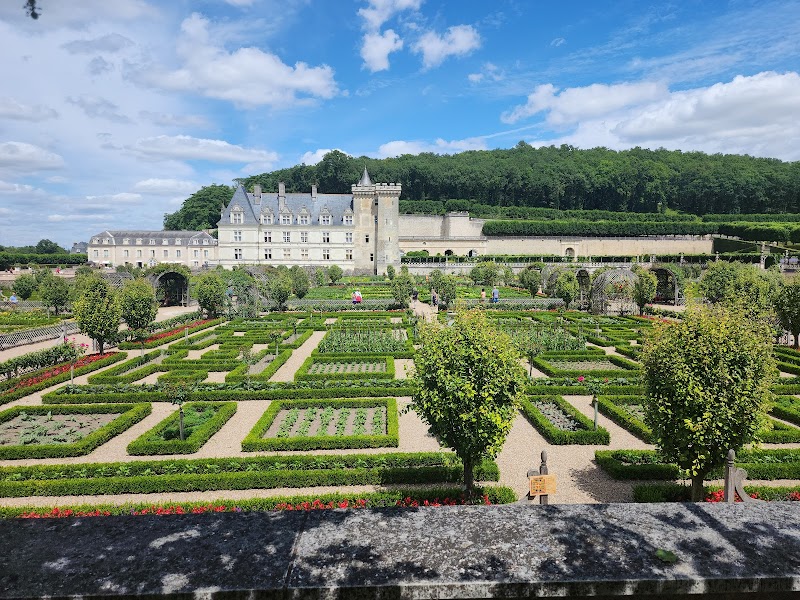
Kitchen Garden Grid

Kitchen Garden Grid

Where to find itGo to the overlook above the ornamental kitchen garden and look for the repeated square beds below.

Look forA strict patchwork of vegetable plots separated by clipped edging and planted in different colors.

Why it matters · This is Villandry’s clearest argument that food production can be decorative. The point is not just that vegetables are grown here, but that they are arranged with the same discipline as a formal parterre.
Look at this · 4 of 4
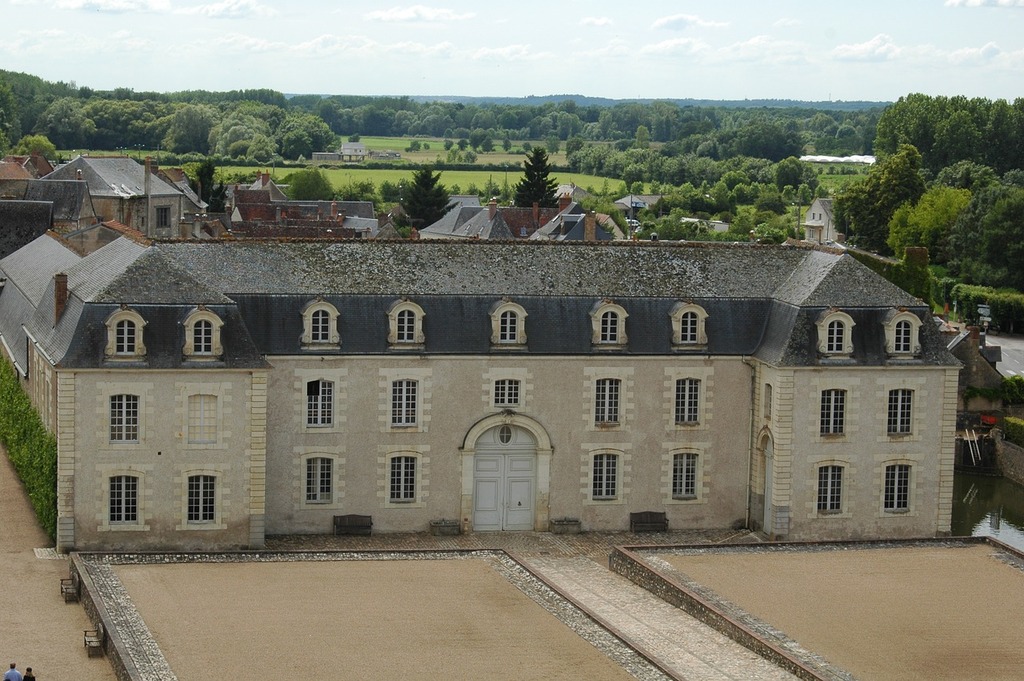
Chateau Upper Windows

Chateau Upper Windows

Where to find itHead upstairs in the chateau and stand by the upper windows or tower openings that face the gardens.

Look forThe garden terraces laid out below in one wide, ordered sweep.

Why it matters · Many visitors leave after the interior and never get this angle. From above, the gardens stop being separate rooms and become a single designed landscape tied to the house.
Photo gallery

What it looks like

Almost done · before you leave

Spot these

Find each one — tap to tick it off.

Done · time to eat

Nearby eat & drink

Filters

Section
Price
Max walking time
Minimum rating
Type

Lunch

Sit-down lunch spots

Dinner

Where to land in the evening

Quick grab

Fast food & takeaway for when you just need something fast
Searched, none found within range: Specialty coffee · Coffee & bakery · Familiar chains / fast food. The nearest fast food is likely in the closest town.

Practical info

Address 3 Rue Principale, 37510 Villandry, France
Time 09:35
Suggested 130 min
Rating 4.7★ (20,373)
Cost €36
Website www.chateauvillandry.fr
Map Open in Google Maps

More about this place

At Villandry, don’t just skim the formal beds: look for the low box hedges that turn the water, sun, kitchen, and herb gardens into clean geometric panels, and then head upstairs in the chateau for the garden views most people miss on the way out.[1][5] Go early in the day for the gardens, because the light is better and the busiest window is late morning to mid-afternoon; if you want the full visit, make the chateau first and the gardens last, since the interior closes about an hour before the gardens.[1][4] What makes this place matter is that it is one of the clearest surviving examples of a Renaissance pleasure estate where decoration, food production, and design are treated as one system, not separate features.[1][7] For Claudiu, Roxana, and Melek, the practical upside is simple: free parking makes arrival easy, and the family cost is straightforward at €14 per adult and €8 for Melek, with the site large enough that a self-paced visit works well for a 17-year-old.[1][4]