Day 9 · Loire Valley
Château d'Azay-le-Rideau
Step 1 · Before you enter · ~15 sec

Château d'Azay-le-Rideau

★ 4.6 (17,666) €32 Maps ↗ Website ↗

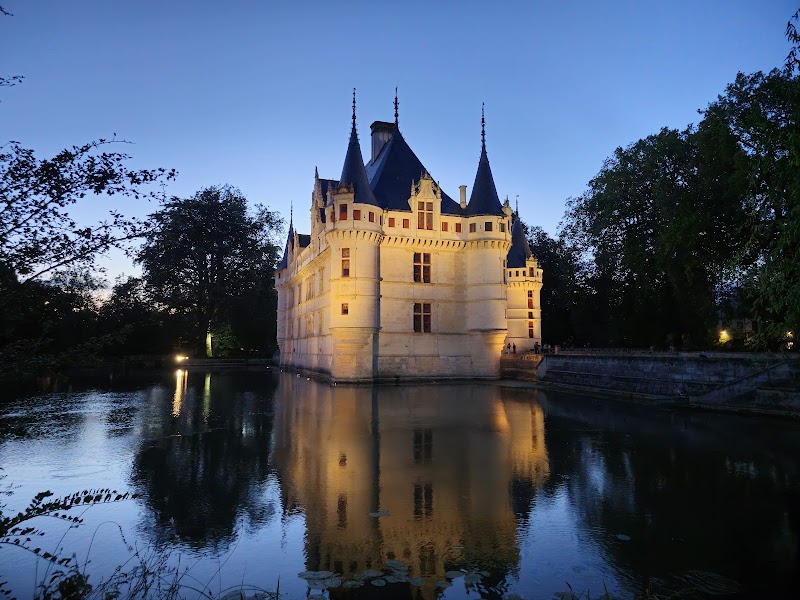
You’re looking at a castle that rises from the water as if it’s floating. Step a little to the side, and you’ll see why Azay-le-Rideau is one of the Loire’s great Renaissance landmarks.

Stand outside · play the audio first, then read on.

Step 2 · The story · ~2 min

Why this place matters

This château was built in the early 1500s, when French builders were blending local design with ideas from Italy, and it sits on an island in the Indre River so the water becomes part of the picture. What you see today also carries the mark of 19th-century restoration, so the neat rooflines and balanced shape are not just old, they were carefully remade to look this complete. As you walk around, look for the L-shaped plan and the small turrets at the corners, because those details read best when you stop at an angle instead of straight on. If you can, head toward the quieter south side and watch for the reflection in the river, since that is where the château seems to double itself in the water. For your family, this is also an easier stop to enjoy: entry is €16 for adults, and Melek enters free as an EU resident under 26.

Read more →
Step 3 · Going in

Here's how

Best time to visit

Go earlier in the day if you can, when the light is kinder and the south-side reflection is less crowded. The water view is most rewarding when you can step back without a line of visitors in it.

Entry strategy

The official price is €16 for adults, and Melek should enter free as an EU resident under 18 or 18–25 depending on his age; the monument also notes free admission for under-26 EU residents. Book ahead if you want to reduce uncertainty, since reservation is strongly recommended and the last access is one hour before closing.

Recommended route

Start outside with the river views first, then circle to the side angles to read the plan and turrets, and only then go in. That sequence gives you the building’s setting and shape before the interior, which makes the later rooms easier to place in your head.

Tap ⓘ at the top right anytime for hours, address, prices.

Look at this · 1 of 5
North-side waterline

North-side waterline

Where to find itStand on the path along the north bank, just far enough back to see the whole island and château together.

Look forThe full mass of the building sitting in the Indre, with the water catching the façade and roofs.

Why it matters · This is where the château’s setting makes sense as a single picture. Without this wider view, you miss how strongly the water controls the building’s silhouette and why the reflections are part of the monument’s identity.
Look at this · 2 of 5
South-side reflection angle

South-side reflection angle

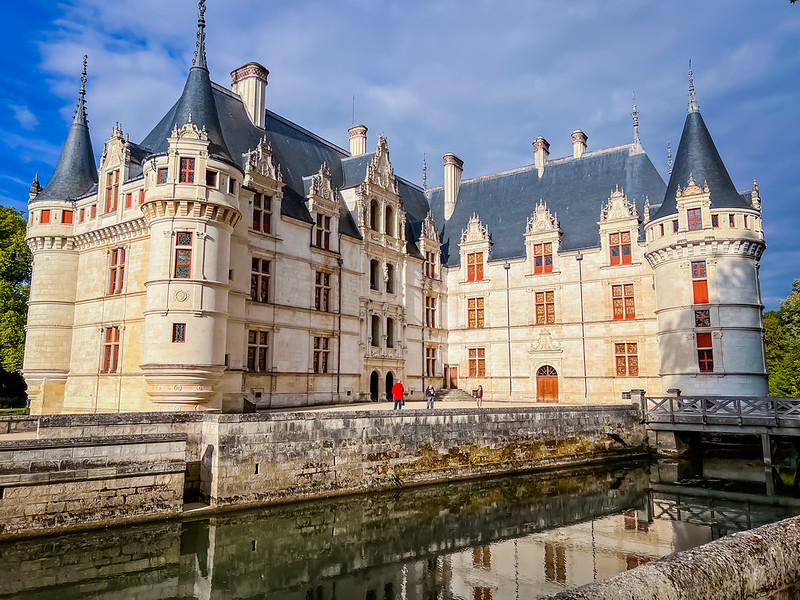
Where to find itWalk around to the quieter south side and stop where the river edge gives you a clear oblique view of the château.

Look forThe cleanest mirror-like reflection, with fewer people cluttering the frame.

Why it matters · This angle shows the water effect that made Azay-le-Rideau famous. It also lets you read the château as an object in water rather than just a pretty façade.
Look at this · 3 of 5
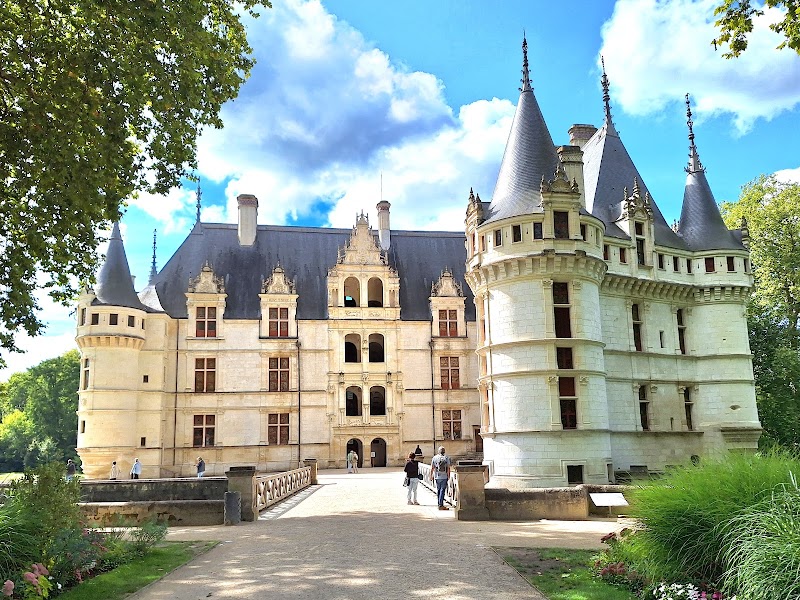
Side view for the plan

Side view for the plan

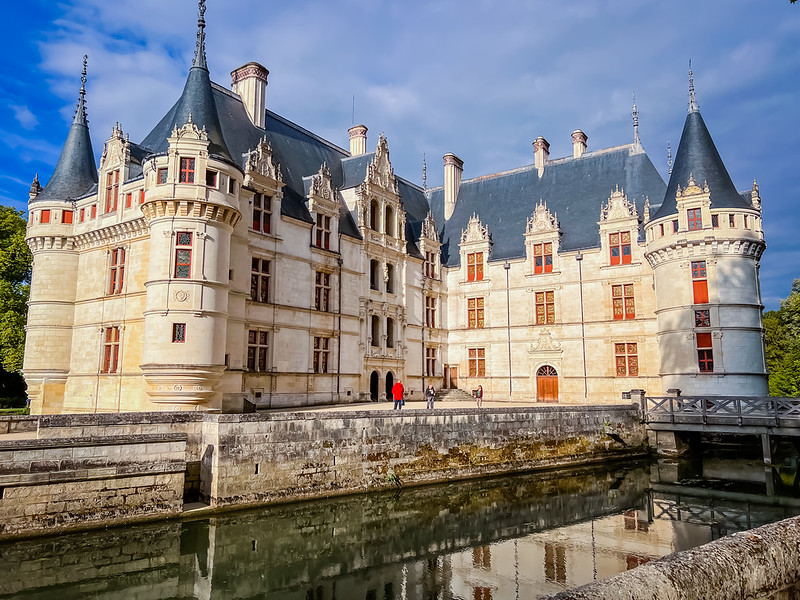
Where to find itMove to either side of the château instead of staying front-on, then pause where you can see two wings meeting.

Look forThe L-shaped plan and the small corner turrets that only read clearly from the side.

Why it matters · From the front, the building can feel more symmetrical and obvious than it really is. The side angle reveals the plan and the corner treatment that give the château its precise, sculpted look.
Look at this · 4 of 5
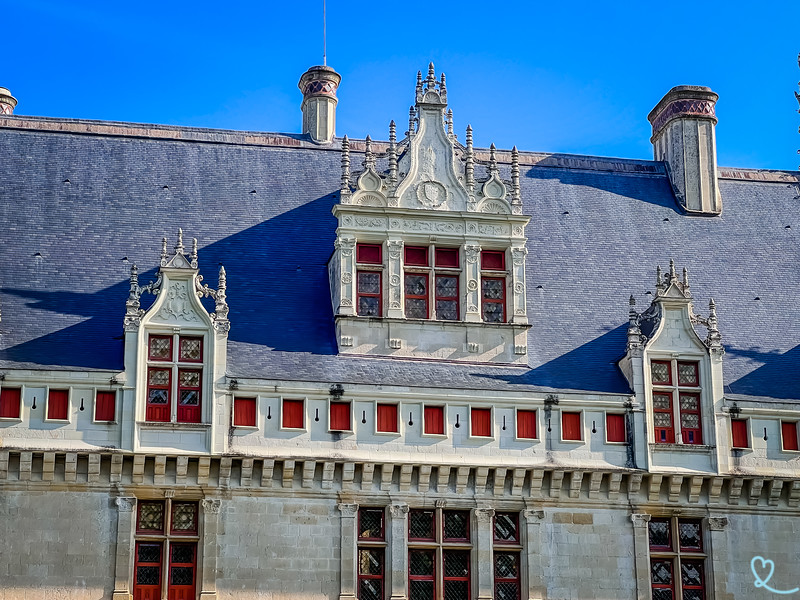
Roofline and turrets

Roofline and turrets

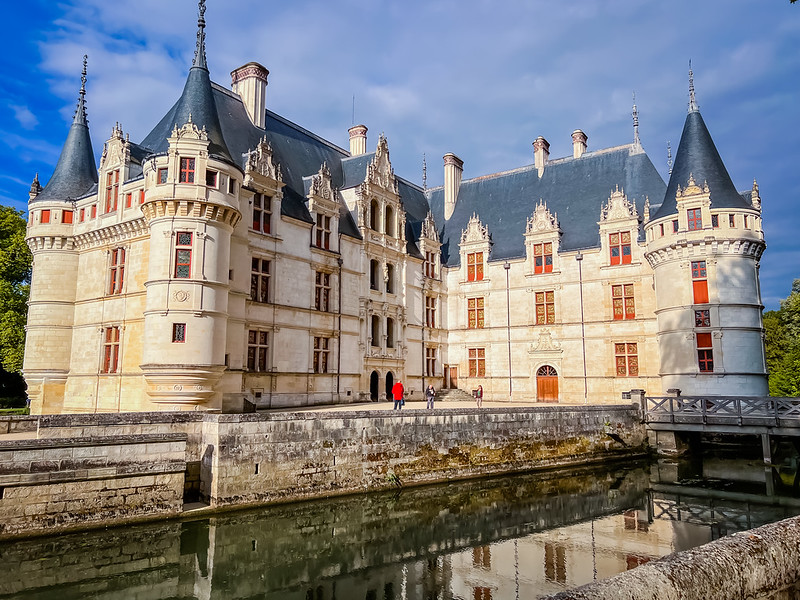
Where to find itLook upward from the courtyard edge or from a side path where the roofline is not cut off by nearby trees.

Look forThe steep roofs, chimneys, and the small turrets at each corner finishing the composition.

Why it matters · These details are part of what makes the restoration feel so exact. If you only look at the walls, you miss the roofscape that gives the château its early-Renaissance character.
Look at this · 5 of 5
Façade restoration clues

Façade restoration clues

Where to find itStudy the exterior masonry at close range on any side where the stonework is easy to approach.

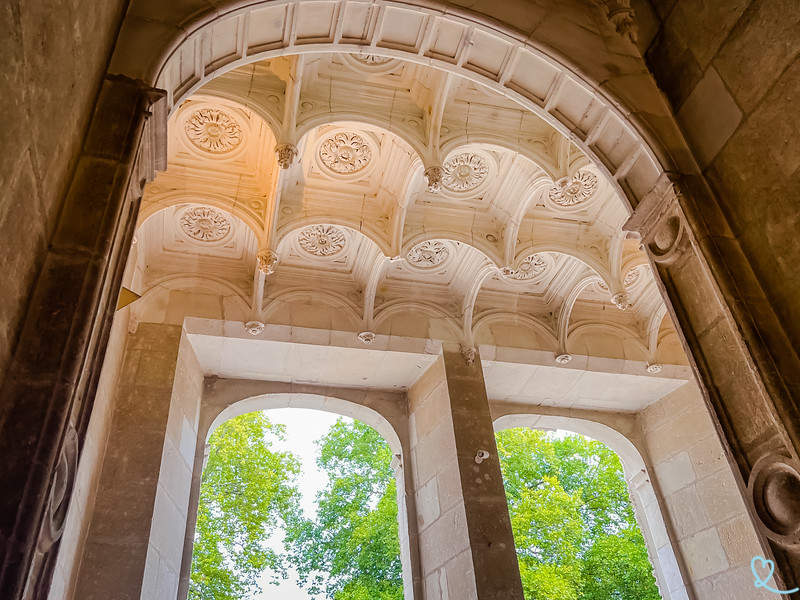
Look forThe polished, unified façades and roofs that look too coordinated to be purely medieval.

Why it matters · The château’s present unity was shaped by 19th-century restoration, not untouched survival. Noticing that helps you read the building as a restored national monument, not a frozen original.
Photo gallery

What it looks like

Almost done · before you leave

Spot these

Find each one — tap to tick it off.

Done · time to eat

Nearby eat & drink

Filters

Section
Price
Max walking time
Minimum rating
Type

Coffee & bakery

Casual cafés and bakeries closest to here

Lunch

Sit-down lunch spots

Dinner

Where to land in the evening

Quick grab

Fast food & takeaway for when you just need something fast

Searched, none found within range: Specialty coffee · Familiar chains / fast food. The nearest fast food is likely in the closest town.

Practical info

Address 19 Rue Balzac, 37190 Azay-le-Rideau, France
Time 12:00
Suggested 75 min
Rating 4.6★ (17,666)
Cost €32
Website www.azay-le-rideau.fr
Map Open in Google Maps

More about this place

Look for the L-shaped plan and the small turrets at each corner; they read clearly once you stop at the side angles, not just the front, and the restored façades and roofs are part of what makes the place feel so precise[4][8]. Go earlier in the day if you can, then circle to the quieter south-side views for the best water reflection and fewer people in the frame; the official site lists €16 entry and free admission for under-26 EU residents, so Melek should enter free[2]. It matters because the château’s current unity is not original—it was shaped by 19th-century restoration, which makes it a good case study in how heritage can be rebuilt into a “national treasure” as much as preserved[1]. For a family of 3, that makes the visit easier and cheaper than many Loire stops, and Melek may actually enjoy it if you frame it as a quick hunt for the turrets, rooflines, and reflection shots rather than a long history lesson[1][2].